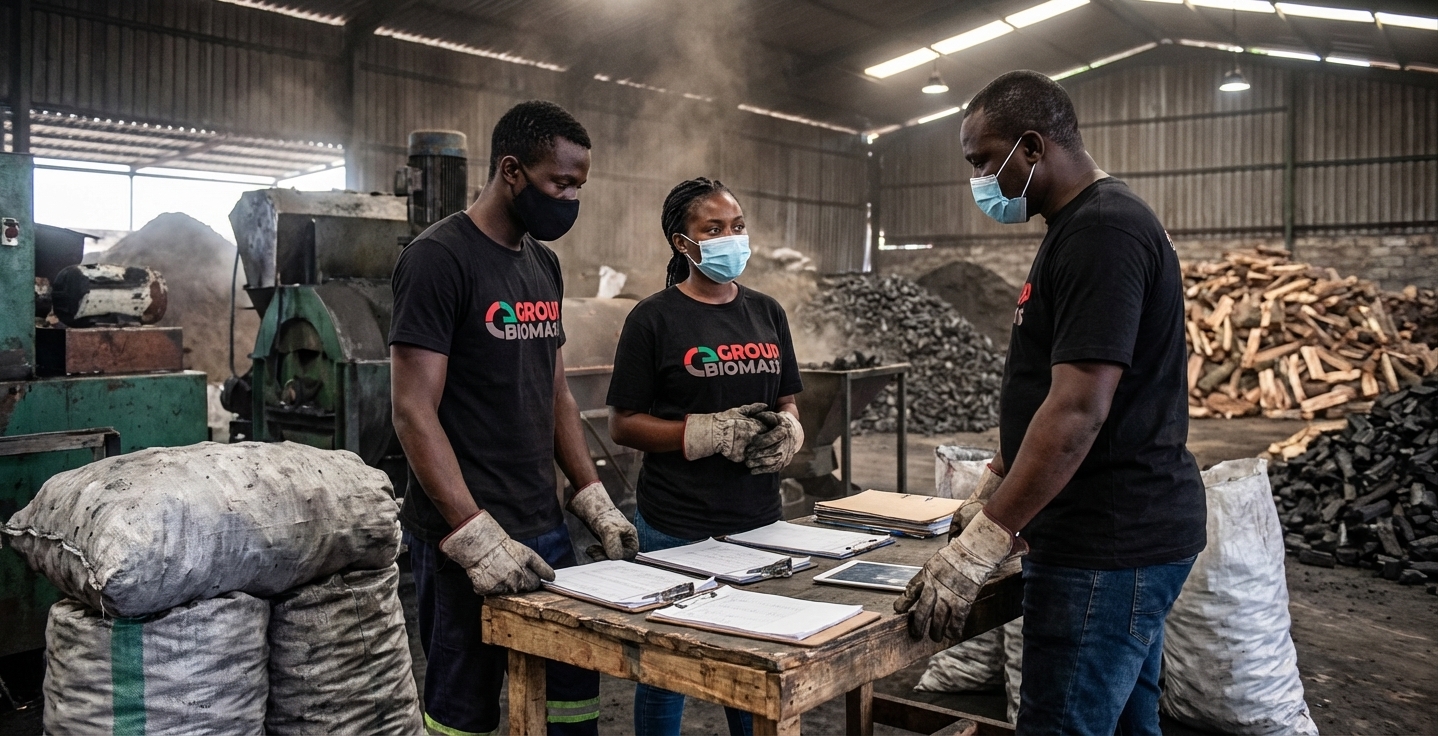
Deep within the nation , a massive facility stands as a testament to the increasing demand for biomass. This industrial complex, reportedly the nation’s largest fuel operation, is attracting attention for both its output and the evident environmental impact . While offering employment for local communities, the plant’s processes are sparking concerns about sustainable forest harvesting and the overall well-being of the country's forests .
Hardwood Briquet Carbon Export Boom: The Emerging Nation
Cameroon is experiencing a substantial surge in dense lump carbon shipments, positioning itself as a major nation in the global industry. Driven by expanding demand from the US and Pacific countries, the nation’s output of this renewable fuel is rapidly expanding, offering promising opportunities for regional populations and supporting the national financial situation. The emphasis on responsibly harvested wood granulated charcoal is proving to be a essential factor in gaining foreign investors.
Inside Cameroon’s Hardwood Lump Charcoal Factory: Production & Sustainability
Stepping within a average Cameroon hardwood lump carbon factory reveals a surprisingly straightforward process of production. Untreated wood, often obtained from sustainable areas, are carefully logged and moved to a oven. Within this area, the timber is carefully burned with restricted oxygen, a technique that changes it into lump buy hardwood lump charcoal charcoal. Although the conventional methods employed can be demanding, increasingly contemporary factories are integrating improved processes and seeking ways to improve both efficiency and environmental responsibility. This includes investing in green power and introducing rigorous waste control plans.
Cameroon's Charcoal Industry : A Key Contributor in Global Exports
Despite mounting environmental concerns , Cameroon’s charcoal sector remains a surprising but vital player in the global export arena . The production of charcoal from trees is a important source of income for countless of Cameroonian families , particularly in remote areas . This activity generates a substantial volume of charcoal destined for international markets , often supporting cooking needs in other countries , though this need creates difficulties relating to forest loss and responsible forest protection.
Le Contre Charbon de Bois Lump en Bois Dur vs. Les Briquettes Une Perspective Camerounaise
Au le Cameroun , le décision entre un charbon de bois dur en bloc et les briquettes soulève une interrogation . Traditionnellement, , le charbon de bois a été privilégié pour son goût distinctif et sa capacité à produire une température forte, parfaite pour les rôtisseries traditionnelles . Néanmoins, , les briquettes , davantage faciles à obtenir et moins chères , attirent à popularité , particulièrement chez les régions citadines .
Sustainable Charcoal Production : The Future of Cameroon Forest Sector
The traditional method of charcoal manufacture in Cameroon presents a significant threat to its valuable hardwood forests . However, innovative sustainable approaches offer a promising path forward. These include technologies like wood waste gasification and efficient earth systems, which lessen deforestation, lower emissions, and create financial opportunities for local communities . Embracing these eco-friendly alternatives is crucial to safeguarding Cameroon's biological heritage and securing the long-term sustainability of its hardwood sector while addressing climate concerns.
Comments on “ Cameroon's Colossus Revealing the Region’s Premier Charcoal Operation”